Built as a segmented entity — each limb has its own hitbox, its own damage state, its own feedback. The boss shifts attack patterns at health thresholds and telegraphs every dangerous move with a visual cue timed to the damage window. Getting that "game feel" right — the moment you know you should dodge — took most of the iteration time.
Go To Hell
2–4 player couch co-op. Lovecraftian horror. One very angry elder god.
Unreal Engine 5
C++
AI Systems
Team Project
What is it
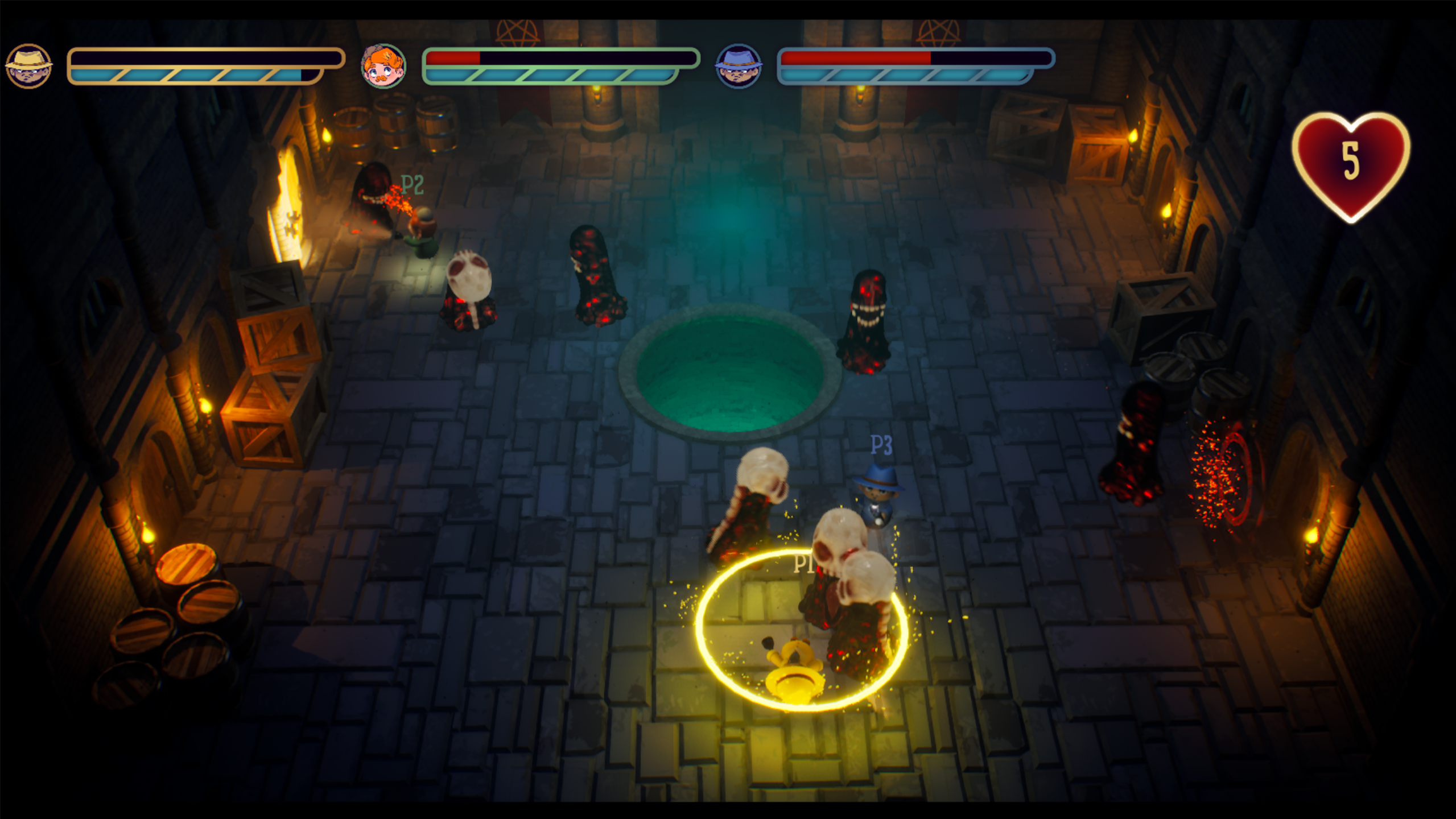
A cult has summoned an elder god and you — a group of detectives with flashlights and absolutely no business being here — are the only thing standing between it and the physical world.
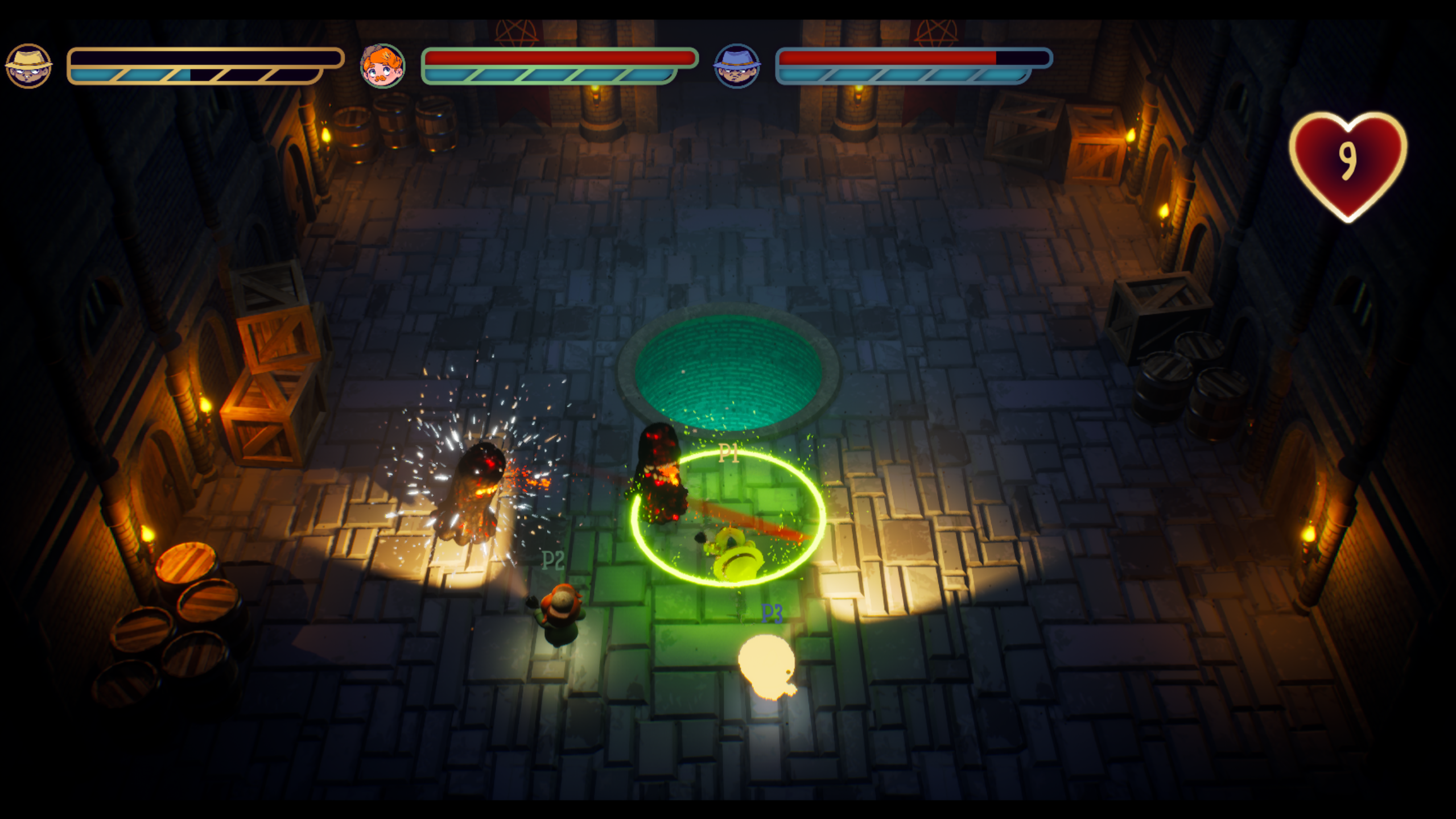
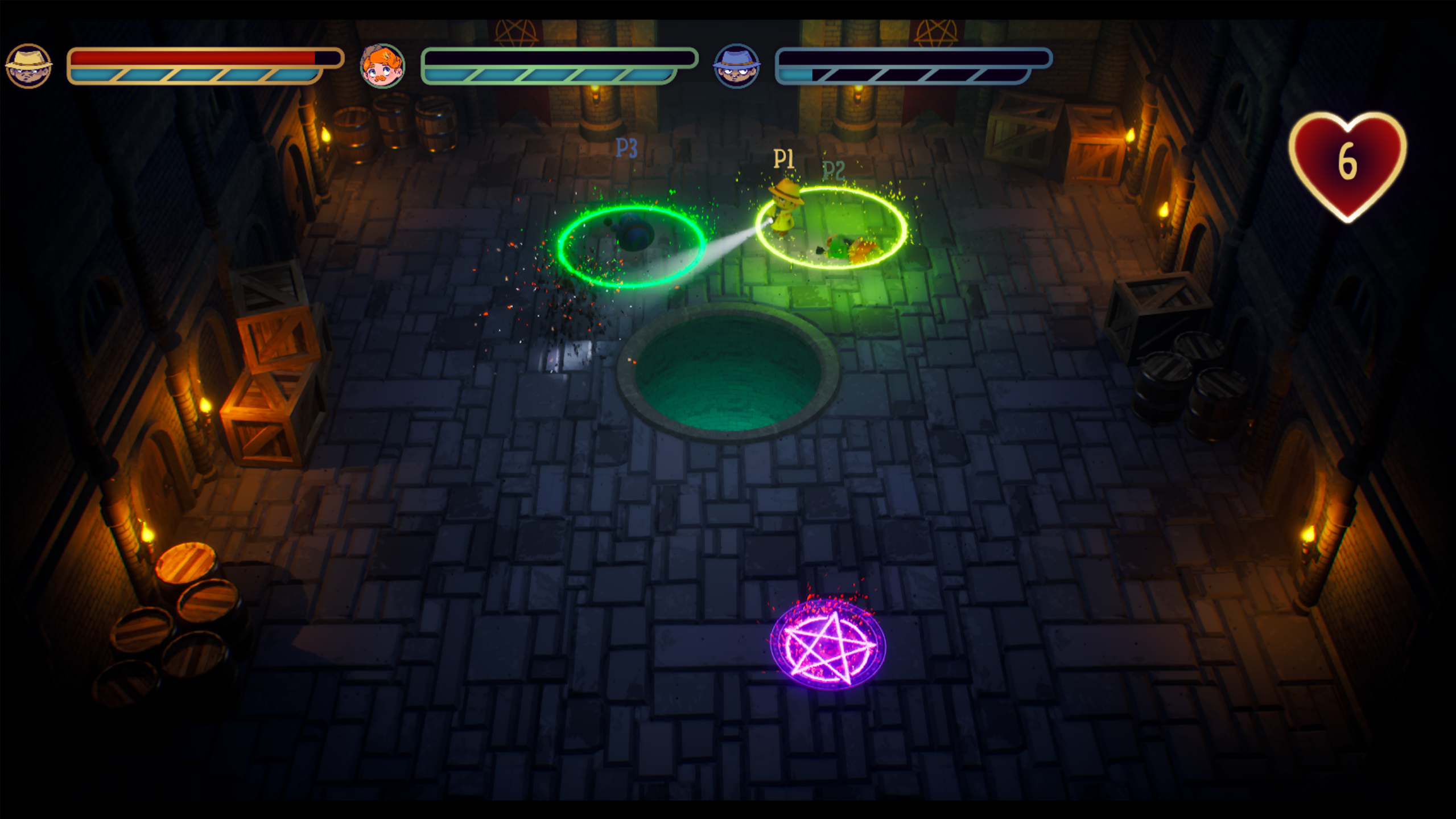
The twist: you can't fight the god directly. One player steps into a pentagram and transcends to the Astral Plane to deal damage with astral bullets, while the others stay behind burning away the minions trying to drag them back. Switch too slowly and everyone dies. Communicate and you might actually pull it off.
Oh, and your sanity drains the longer you're in there. Low sanity makes you faster but chips your max health. It's a trade-off you'll be arguing about with your friends for the entire run.
What I built
My ownership was the enemy ecosystem — everything that's trying to kill you.
Two enemy archetypes: ranged enemies that kite and strafe, melee enemies that pathfind directly. A wave manager sits above both, controlling spawn frequency and density to keep the difficulty curve climbing without spiking into unfair. Decoupled from the AI logic so designers could tweak numbers without touching code.
What I took away
This was the first project I went through start to finish as part of a full team — brainstorm, art bible, tech doc, GDD, sound bible, ship. The technical stuff (decoupling AI from spawner, managing state transitions on the boss) was challenging but learnable. What actually surprised me was how much of game development is just communication — giving useful feedback to artists, keeping designers and programmers on the same page, knowing when to push back and when to adapt.
The boss fight in particular taught me that complex systems feel bad unless the player can read them. A technically correct state machine means nothing if the animations don't tell you what's coming.